The Front Seam Problem Is a Construction Issue, Not a Fit Issue
Quick Answer: Front seam visibility happens when four pattern pieces meet at a single point at the crotch, creating a seam junction that sits directly against the body and pulls fabric inward under tension. A gusset — a diamond or triangular panel inserted at the crotch — moves those seams outward and away from the center, which is why gusseted leggings are dramatically less prone to the problem regardless of size or price.
It’s the single most reliable construction detail to check, and it takes about five seconds to look for.
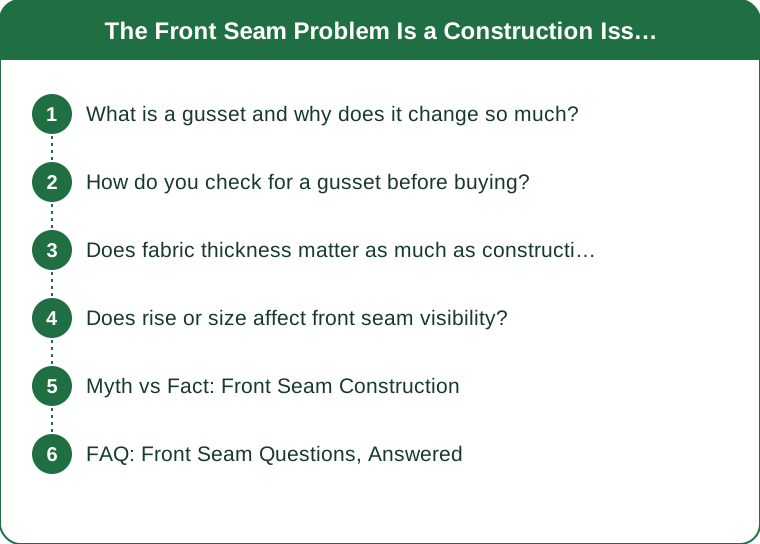
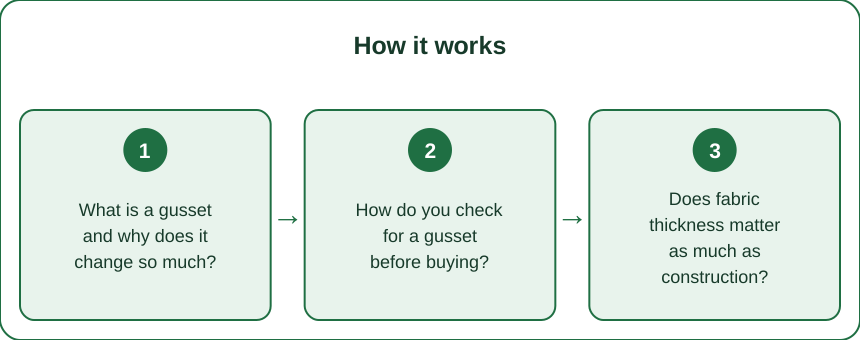
What is a gusset and why does it change so much?
A gusset is a separate diamond- or triangle-shaped fabric panel sewn into the crotch area, replacing the point where the front, back, and two leg panels would otherwise all converge.
Without one, those four seams meet at a single junction, and that junction becomes a stress concentration point — every seam pulls on it from a different direction. Under tension, the whole assembly draws inward toward the body. The gusset spreads that junction into four separate, shorter seams around the edges of the panel, none of which sit at the center line. The stress gets distributed instead of concentrated, and the fabric spans the area smoothly.
How do you check for a gusset before buying?
Turn the leggings inside out and look at the crotch area. A gusset appears as a distinctly shaped panel — usually a diamond or a triangle — with its own seams around the perimeter. No gusset means you’ll see a simple X or T where the seams cross.
Some brands mention it in product descriptions, often as ‘gusseted crotch’ or ‘diamond gusset,’ though many don’t list it even when present. When shopping online, the inside-out product photo or a reviewer’s photo is usually the fastest way to confirm. It’s worth the check: gussets are one of the cheapest quality signals to verify and one of the most predictive.
Does fabric thickness matter as much as construction?
It matters, but less than the gusset. A thicker, denser knit resists being drawn inward simply because it’s more rigid, so a heavy fabric can partly mask a missing gusset. A thin fabric with no gusset is the worst combination — minimal resistance plus a concentrated stress point.
That said, a thin gusseted pair generally outperforms a thick ungusseted one, because construction addresses the cause and thickness only opposes the symptom. If you’re choosing between two pairs, the gusset is the better tiebreaker. The ideal is both: a mid-weight four-way-stretch knit with a proper gusseted panel.

Does rise or size affect front seam visibility?
Both do, secondarily. A too-small pair puts every seam under higher tension, which increases the inward pull at the junction — so a size that’s genuinely too tight will worsen the issue even on a gusseted pair.
Rise affects it through seam angle. A very low rise brings the crotch junction into a position where the seams meet at sharper angles, increasing the concentration. High-rise designs generally distribute the geometry more favorably. But neither size nor rise substitutes for construction — a well-fitting ungusseted pair will still show the issue under deep flexion, while a gusseted pair usually won’t even at the edge of its size range.
Myth vs Fact: Front Seam Construction
Myth: It’s a sizing problem you can shop your way out of. Fact: sizing up reduces tension somewhat, but the seam junction is still there. Construction is the actual variable.
Myth: Only expensive leggings have gussets. Fact: gussets are inexpensive to add, and plenty of mid-price brands include them while some premium ones skip them. Check rather than assume by price.
Myth: Seamless leggings solve it automatically. Fact: seamless construction eliminates side seams but most seamless designs still have a crotch junction — some include a knitted-in gusset zone and some don’t.
FAQ: Front Seam Questions, Answered
Do gussets affect comfort beyond appearance?
Yes — they meaningfully increase range of motion in deep squats and lunges, because the crotch area can stretch in more directions without a single stress point.
Are gussets more durable?
Generally, since blowouts most often start at concentrated seam junctions. Distributing that stress reduces the most common failure point.
Can a gusset be added to leggings I already own?
Technically yes for a skilled tailor, but the cost usually approaches the price of a new pair. Not typically worth it.
TL;DR:
- The problem is a four-seam junction at the crotch concentrating stress at the center line
- A gusset panel moves those seams outward and distributes the tension
- Check by turning leggings inside out — a diamond or triangle panel means gusseted
- A thin gusseted pair generally beats a thick ungusseted one
This is a construction question with a clear answer. Check for the gusset and most of the problem disappears before you ever wear the pair.
See It in Motion
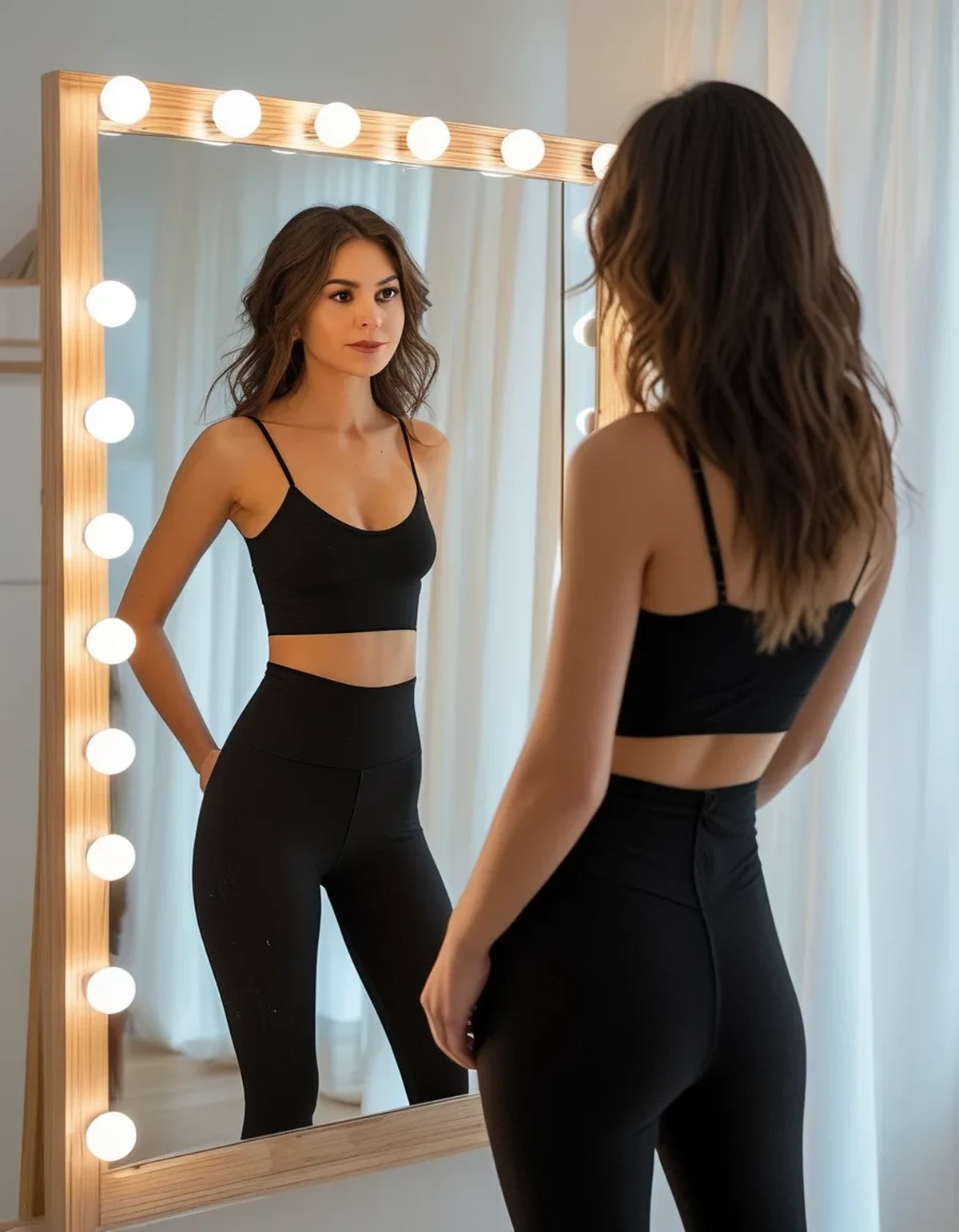
Seen here: Super High Waist Embossed Yoga Leggings with Inner Pocket — shop it on bubblelime.com
Keep Reading
This article is for general informational and styling purposes only. Fit, sizing, and product availability may vary.