Front Seam Visible When You Sit but Not When You Stand? Here Is Why
Quick Answer: Standing, your leggings hang smoothly and the front seam has no reason to pull. Sitting, the fabric is drawn tight across the hip flexors and pulled downward at the crotch, which presses the seam inward. The construction that prevents it: a gusset rather than a four-seam junction, a flat or bonded front seam instead of a raised one, higher-gsm fabric that holds its own shape, and a rise high enough that the front is not being pulled down when you sit. Sizing down makes this worse, not better.

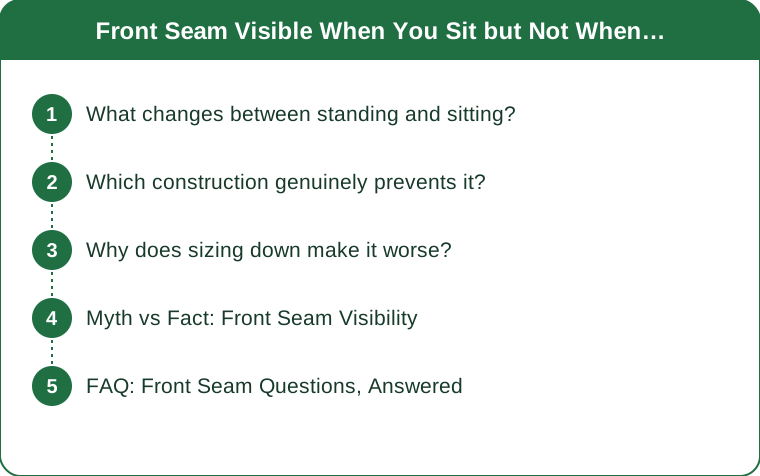
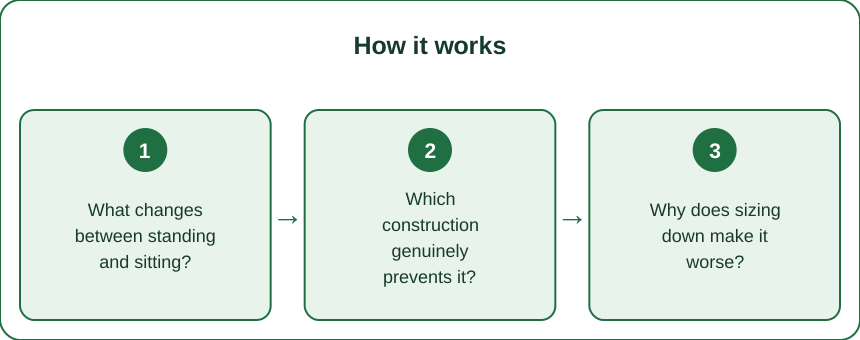
What changes between standing and sitting?
Standing, the fabric at the front of your leggings is essentially at rest. It follows the shape of your body without much tension in any direction.
Sitting does three things at once.
It flexes the hip to 90 degrees, which requires more fabric length across the front of the hip. The garment has to find that fabric somewhere, and it pulls it from wherever there is slack — usually from below.
It pulls the crotch downward and forward, because your seat is now bearing weight and the back of the garment is stretched across it. That drag pulls the front seam down and in.
It stretches the fabric widthwise across the thigh, which thins it and makes any seam or contour more visible.
So the seam is not moving on its own. It is being pulled into place by tension coming from three directions, and that tension only exists when you are seated.
This is why fitting-room checks standing in front of a mirror miss the problem entirely — and why the sit test is the only one that predicts real wear.
Which construction genuinely prevents it?
A gusset, first and most importantly. Instead of four seams meeting at a single point in the middle of the crotch, a gusset inserts a diamond or triangular panel. There is no center junction to press inward, and the panel distributes the downward tension across a wider area.
This is the difference that matters most, and it is checkable in thirty seconds by turning the pair inside out.
Flat, bonded, or offset seams. A raised overlocked seam creates a physical ridge. A bonded seam is flat against the fabric. Some designs also offset the front seam slightly to one side so it is not centered.
Fabric weight. At 240 gsm and above, the fabric has enough body to resist being pulled into a fold. Thin fabric conforms to whatever tension it is under.
Rise height. A high rise anchors the front of the garment above the hip crease, so sitting does not drag the whole front panel downward. Low-rise pairs are far more prone to this for that reason alone.
A double-layer front panel, which some brands include. It adds structure exactly where it is needed.
What does not help: seamless construction alone. Seamless means no stitched seam, but a knit ridge can still form. Gusseted plus dense beats seamless plus thin.

Why does sizing down make it worse?
Because every mechanism above is driven by tension, and a smaller size adds tension in all directions before you have even sat down.
A pair that is already stretched to its limit standing has no slack to give when you sit. The garment cannot find the extra fabric it needs across the hip, so it takes it from the crotch — harder, and more visibly.
Stretched fabric is also thinner per square inch, which means less material covering the same area and more visible contour of whatever is underneath.
And tight fabric conforms more closely to the body’s shape by definition. That is what tightness means. A pair with a little ease drapes over rather than molding into.
The correct move when you see a front line is usually the opposite of the instinct: go up a size, or go up in fabric weight, and check for a gusset.
The one exception is when the pair is genuinely too large — then the excess fabric folds and the fold itself is visible. That looks different, though: a loose fold moves and shifts, while a tension line is fixed and appears in the same place every time you sit.
A good diagnostic: stand up and see if the line disappears. Tension lines vanish; folds from an oversized pair tend to stay.
Myth vs Fact: Front Seam Visibility
Myth: It means the leggings are too small. Fact: More often it means the construction lacks a gusset or the fabric is too light. Size is only one of several inputs, and sizing down is a common cause rather than a cure.
Myth: Only cheap leggings do this. Fact: Expensive pairs with a four-seam junction and lightweight fabric do it too. Construction predicts it better than price.
Myth: Wearing thicker underwear solves it. Fact: It changes the contour underneath but does nothing about the seam tension. Seamless underwear helps with visible edges, which is a different problem.
Myth: Seamless leggings never have this issue. Fact: Seamless knit construction can still form a ridge under tension. The gusset matters more than whether the seam is stitched.
Myth: Dark colors hide it. Fact: They hide it somewhat by reducing the shadow contrast, which is genuinely useful. But it is a cosmetic workaround, and the tension causing it is also what makes the pair uncomfortable.
FAQ: Front Seam Questions, Answered
How do I check for a gusset before buying online?
Product photos rarely show it. Look for the words gusset or gusseted crotch in the description — brands that include one almost always mention it, because it costs more to make.
Does the fabric’s stretch direction matter?
Yes. Four-way stretch distributes tension in both directions; two-way stretch resists in one, which concentrates the pull. Four-way is better for this specifically.
Will washing fix a pair that does this?
No, but a pair that developed the problem over time has usually lost recovery — the fabric no longer returns to shape, so it stays in whatever position tension puts it. That is a sign the pair is near the end of its useful life.
Are shorts or a longer top a reasonable workaround?
A longer top is the practical answer when you like the pair and do not want to replace it. Bike shorts underneath add a layer but also add bulk, which can make the contour more visible rather than less.
TL;DR:
- Sitting pulls the front seam downward and inward from three directions at once — standing does not.
- A gusset is the single biggest preventive feature; check by turning the pair inside out.
- Want 240 gsm or heavier, flat or bonded seams, four-way stretch, and a high rise.
- Sizing down makes it worse, because every cause is driven by tension.
- Test by sitting in the fitting room, not by standing in front of the mirror.
It is a construction problem with a construction answer. Once you start checking for a gusset, most of it goes away.
See It in Motion
Seen here: Super High Waist Embossed Yoga Leggings with Inner Pocket — shop it on bubblelime.com
Keep Reading
This article is for general informational and styling purposes only. Fit, sizing, and product availability may vary.