How Fabric Weight Decides Seam Visibility — the Number to Look For
Quick Answer: Fabric weight, measured in grams per square meter (GSM), largely determines how much a seam shows through. Leggings under about 220 GSM tend to reveal construction lines and stretch translucent; 250 to 320 GSM is the range where seams disappear and opacity holds under stretch. Where brands publish GSM, it predicts seam visibility better than price or fiber content.
Two pairs, same brand, same gusset construction, and one shows every line while the other shows nothing.
The difference is usually a number that is printed on one product page and missing from the other.

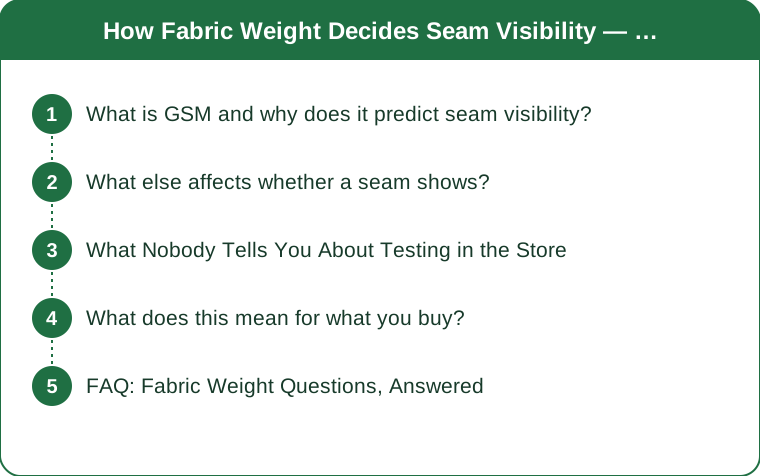
What is GSM and why does it predict seam visibility?
It is a density measure, and density is what hides things.
GSM means grams per square meter — the weight of a square meter of the fabric. Higher GSM means more fiber packed into the same area.
Denser fabric transmits less light and deforms less. A seam becomes visible either because light passes through the surrounding fabric and not the seam, or because the fabric around the seam stretches more than the seam does, creating a visible tension line.
Dense fabric resists that differential stretch. At higher GSM the fabric near the seam behaves more like the seam itself, so the transition is smoother and less visible.
The rough ranges: under 220 GSM is lightweight and generally shows construction; 220 to 250 is variable and depends on knit structure; 250 to 320 is the range most opaque, seam-hiding leggings sit in; above 320 is heavy compression that hides everything and is warmer than most people want indoors.
GSM does not tell you everything — knit structure, fiber, and dye all contribute — but where it is published it is the single most predictive number available.
What else affects whether a seam shows?
Four factors, all of which you can assess without a spec sheet.
Color. Light colors show seams far more than dark ones because the contrast between fabric and shadow is greater. A pattern is the most forgiving option, and a light solid is the least. If a light pair is the goal, GSM matters more.
Seam construction. A flatlock seam lies flat and spreads across a wider area; an overlock seam creates a ridge. Flatlock is more expensive and visibly better for this.
Gusset shape. A diamond or triangular gusset moves the seam intersection away from the center front, which is the highest-visibility point. A four-way seam meeting at center front is the worst case, and it is common in inexpensive leggings.
Fiber content. Nylon-based fabrics are generally more opaque at the same weight than polyester ones and hold their opacity better under stretch. A high elastane content improves recovery, which keeps the fabric from thinning permanently.
And stretch state changes everything. A fabric that is opaque relaxed can be translucent at 30% stretch, which is exactly what happens across the thigh in a deep squat — so any test has to be done stretched.

What Nobody Tells You About Testing in the Store
The standard advice is inadequate, and there is a better sequence.
The ‘bend over and check’ test is the right idea done badly. People bend over in front of a mirror, which shows the back only. Seam visibility issues are most often at the front and inner thigh, where you cannot see them yourself in that position.
Stretch a section over your hand instead. Pull the fabric across your palm until it is at real stretch and look for your skin tone coming through. This tests the fabric at the tension it will actually experience and works anywhere in the store.
Check under overhead light, not fitting-room light. Fitting rooms are lit from above and in front to be flattering. Overhead retail lighting is a much harsher and more realistic test.
Squat and look at the front, not the back. Front seam and gusset visibility appear in a deep squat, which is the position that matters for training.
Photograph it with a flash. A flash is far brighter than room lighting and reveals what a gym’s overhead lights will do. This feels excessive in a store and it is the single most reliable test available — the results are frequently nothing like the mirror suggested.
What does this mean for what you buy?
Five practical rules.
Look for published GSM and prefer 250 to 300 for general training. Brands confident in their fabric usually publish it; a missing number is weak evidence of a lighter fabric.
Buy light colors only in higher GSM. A pale legging in a lightweight fabric will show seams regardless of anything else, and no amount of care changes it.
Prefer flatlock seams and an offset gusset. Both are visible on inspection before purchase.
Expect a warmth trade-off. A 300 GSM legging is genuinely warmer than a 200 GSM one, which is welcome from October onward and less so in a hot studio in July. Owning both, for different uses, is a reasonable answer.
Wash cold and skip the dryer. Heat degrades elastane, and a pair that loses recovery becomes thinner under stretch, which is how a pair that was opaque when new becomes see-through at a year old.
Seasonal note: autumn is the easiest time to buy higher-GSM leggings, since the extra warmth is a benefit rather than a cost — and the heavier fabrics that were uncomfortable in August are the ones that solve seam visibility completely.
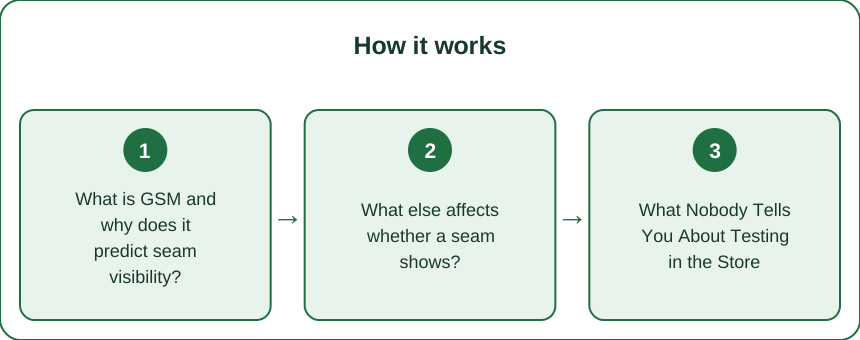
FAQ: Fabric Weight Questions, Answered
What GSM should I look for in leggings?
250 to 300 GSM is the practical sweet spot for opaque, seam-hiding leggings that are not uncomfortably warm. Under 220 is best treated as lightweight summer or layering wear. Above 320 is genuine compression territory — excellent for opacity and cold weather, warm enough to be noticeable indoors.
Why do brands not publish GSM?
Some do, particularly technical and compression brands, and some treat it as a spec that invites unfavorable comparison. Fashion-led activewear brands frequently omit it. When it is absent, the hand-stretch test over your palm is a reasonable substitute — it is directly measuring what the number would predict.
Does higher GSM mean better quality?
Not by itself. GSM measures density, not durability, fiber quality, or construction. A dense fabric with poor elastane recovery will bag out; a lighter fabric with excellent recovery may last longer. GSM specifically predicts opacity and seam visibility — for those two questions it is the most useful number, and for anything else it is only part of the picture.
TL;DR:
- Fabric weight in GSM largely determines whether construction seams show through.
- 250 to 300 GSM is the range where seams disappear and opacity survives stretch; under 220 usually will not.
- Light colors, overlock seams, and center-front gussets all increase visibility at any weight.
- Test by stretching fabric over your palm under overhead light and photographing with a flash — not by bending in front of a mirror. Check for a published GSM before you check the price. It is the fastest filter available and it answers the question you actually have.
See It in Motion
Seen here: Super High Waist Embossed Yoga Leggings with Inner Pocket — shop it on bubblelime.com
Keep Reading
This article is for general informational and styling purposes only. Fit, sizing, and product availability may vary.