Which Legging Fabrics Hide Front Seams Best
Quick Answer: Front seam visibility is a function of fabric weight, opacity, surface texture, and stretch recovery - roughly in that order. Fabrics at 240gsm or above, with a matte or lightly textured surface and a four-way stretch that recovers well, hide seams best. Lightweight, high-sheen, single-direction-stretch fabrics show the most. Colour matters too, but far less than weight.
Construction sets where the seam is. Fabric decides whether you can see it.

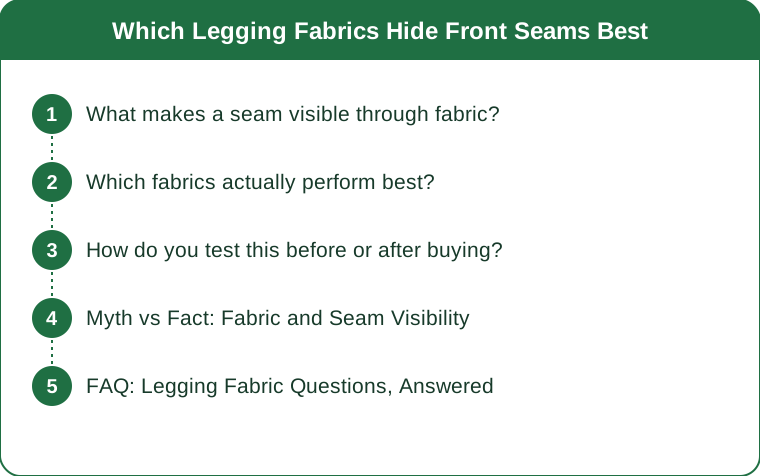
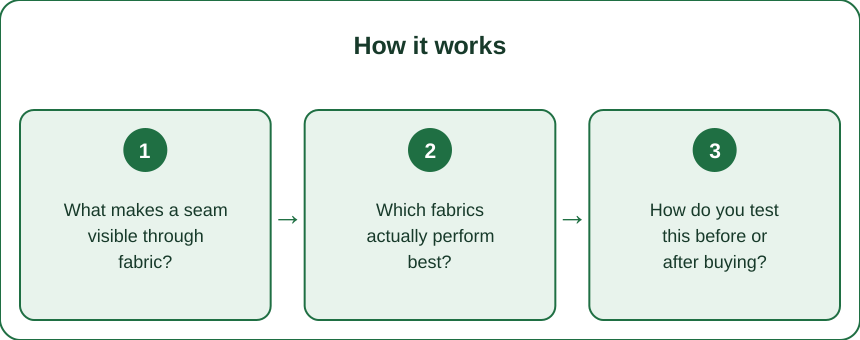
What makes a seam visible through fabric?
Three separate effects, and fabric choice affects all three.
1. Thickness at the seam. A seam is a place where two or more layers of fabric meet, so it is physically thicker than the surrounding material. That thickness creates a raised ridge, and light hitting the ridge from an angle creates a shadow on one side and a highlight on the other. Your eye reads that as a line. A thicker, lofted fabric absorbs more of that step, because the surrounding material is already closer to the seam’s thickness.
2. Tension differential. Fabric is pulled tighter at and around a seam, because the stitching restricts stretch locally. Under tension, fabric thins and becomes more transparent - so the area around a seam can go slightly sheer while the rest does not. A heavier fabric with better recovery distributes tension more evenly and resists this.
3. Light reflection. This is the one people miss. A sheeny surface reflects light directionally, so any change in surface angle - like a seam ridge - produces a visible highlight. A matte or textured surface scatters light in all directions, which softens the transition. This is why a shiny legging shows every seam and a brushed or ribbed one shows almost none, at the same weight.
And the reason it looks different in photos than in the mirror: camera flash and direct overhead light strike at a single angle, which maximizes the shadow-and-highlight effect. Diffuse room light comes from many directions and softens it. The seam was always there; the lighting decides whether you see it.
Which fabrics actually perform best?
Ranked by how well they conceal, with the properties that matter.
Best concealment:
- Heavyweight brushed poly-elastane, 260gsm and above. The brushed surface scatters light and the weight absorbs seam thickness. This is the most reliable category.
- Ribbed knits. The ribbing creates a repeating vertical texture that the eye reads as pattern, so a single vertical seam simply disappears into it. Structurally the most effective concealment available, and it works even at lower weights.
- Matte nylon-elastane at 250gsm or above. The buttery-feel category most premium activewear uses. Good weight, low sheen, good recovery.
- Textured or waffle knits. Same principle as ribbing - surface variation gives the eye something else to read.
Moderate:
- Mid-weight matte poly blends, 200 to 240gsm. Fine when new; concealment degrades as the fabric loses recovery.
- Cotton-blend knits. Matte and forgiving, but poorer recovery means they bag and thin at stress points over time.
Worst concealment:
- Lightweight fabrics under 200gsm. Not enough material to absorb the seam step, and prone to going sheer under tension.
- High-sheen and liquid-finish fabrics. The reflective surface maximizes the highlight along every seam ridge.
- Single-direction stretch. Poor tension distribution means fabric pulls unevenly around seams.
- Anything with poor recovery, new or worn. Recovery is what keeps tension even.
The number to look for is gsm - grams per square metre. Many brands publish it, and 240 to 280gsm is the practical sweet spot for opacity and seam concealment without being uncomfortably heavy. Under 200gsm, expect visibility regardless of construction.
Colour helps, but less than weight. Darker colours reduce the contrast between shadow and highlight, so a black lightweight legging conceals better than a cream one of the same weight - but a heavy cream legging conceals better than a light black one. Weight beats colour.

How do you test this before or after buying?
Three tests, two of which you can do in a fitting room.
The squat test, in daylight. The standard opacity check and it works for seams too. Squat fully, in natural light, and look in a mirror or photograph it. This is the moment of maximum tension and maximum seam visibility. If the seam is invisible in a full squat, it is invisible.
The stretch-and-hold test. Pull a section of fabric between your hands and hold it up to a light. How much light passes through under tension tells you how it will behave over the front panel. A fabric that goes noticeably sheen or sheer here will do the same on the body.
The flash photo test. Take a photo with flash on. Flash is a single hard light source and it exposes every ridge. This is the most revealing test and it is the closest simulation of the gym photo where people notice the problem in the first place.
Construction features to look for alongside fabric:
- A gusset, which moves seams away from the centre front and is the single most effective construction feature
- Flatlock seams rather than overlocked, since flatlock lies flatter and creates less ridge
- Bonded or seamless front panels, which eliminate the seam entirely - the best solution where available
- A wide, smooth waistband without a drawcord channel at the centre front
On degradation over time. Concealment gets worse as the legging ages, because elastane loses recovery, which means the fabric thins more under the same tension. A pair that concealed well when new can show seams after a year. Signs it is happening: bagging at the knee, a general loss of snap, and a visible change in how the fabric sits when you stand up after sitting.
Care that slows it: cold wash, no fabric softener, no tumble drying, and rotating between pairs so the elastane recovers between wears.
Myth vs Fact: Fabric and Seam Visibility
Myth: Thicker always means better concealment. Fact: Weight is the biggest factor but not the only one. A heavy high-sheen fabric can show seams more than a mid-weight ribbed one, because surface finish matters independently.
Myth: Black hides everything. Fact: Black reduces contrast but does not eliminate the ridge. A lightweight black legging under direct light still shows the line, and flash photography exposes it.
Myth: Expensive leggings do not have this problem. Fact: Price correlates with fabric weight and construction, so it helps on average. But plenty of expensive leggings use light, sheeny fabric for a specific feel and show seams accordingly.
Myth: If it looks fine in the mirror it is fine. Fact: Diffuse room lighting is the most forgiving condition. Direct overhead light and camera flash both expose what the mirror hides.
Myth: The seam gets more visible because the legging is too small. Fact: Size contributes through tension, but the same size in a heavier fabric usually solves it. Sizing up often produces a loose waistband without fixing the front panel.
Myth: There is nothing you can do about an existing pair. Fact: A longer top, a slightly looser fit, or reserving that pair for lower-visibility contexts all work. And knowing which fabric to buy next solves it permanently.
FAQ: Legging Fabric Questions, Answered
What gsm should I look for?
240 to 280gsm is the practical sweet spot for opacity and seam concealment. Under 200gsm, expect visibility regardless of construction.
Do ribbed leggings really hide seams better?
Yes, and it is the most effective single property. The repeating vertical texture gives the eye a pattern to read, so one more vertical line disappears into it.
Why does the seam show in photos but not the mirror?
Camera flash and direct overhead light strike from one angle, maximizing the shadow-and-highlight effect along the ridge. Diffuse room light softens it.
Does a gusset eliminate the problem?
It substantially reduces it by moving seams away from the centre front. Combined with a heavier matte fabric, it effectively solves it.
Why did my leggings start showing seams after a year?
Elastane loses recovery over time, so the fabric thins more under the same tension. Cold washing, no tumble drying, and rotating pairs all slow it.
TL;DR:
- Seam visibility comes from thickness at the seam, tension differential, and light reflection - fabric affects all three.
- Look for 240 to 280gsm, matte or brushed surface, four-way stretch with good recovery.
- Ribbed and textured knits conceal best because a repeating pattern absorbs a single vertical line.
- Lightweight, high-sheen, single-direction-stretch fabrics show the most. Weight beats colour.
- Test with a full squat in daylight and a flash photo - both expose what the mirror hides.
Check the gsm before you buy. It predicts this better than price, brand, or colour.
See It in Motion
Seen here: High Waist Yoga Leggings with Side Pockets — shop it on bubblelime.com
Keep Reading
This article is for general informational and styling purposes only. Fit, sizing, and product availability may vary.