Why Front Seams Show More After a Few Washes Than When New
Quick Answer: The seam is unchanged; the fabric around it is not. Repeated washing and wear thin and relax the panel while the seam - reinforced with extra thread and layers - stays exactly as thick as it was. The contrast between them grows, so a seam that was hidden by opaque fabric becomes visible against fabric that no longer is. Heat is the main accelerant, which is why wash temperature and tumble drying matter more than detergent choice.
It is a maintenance problem far more often than a purchase mistake.

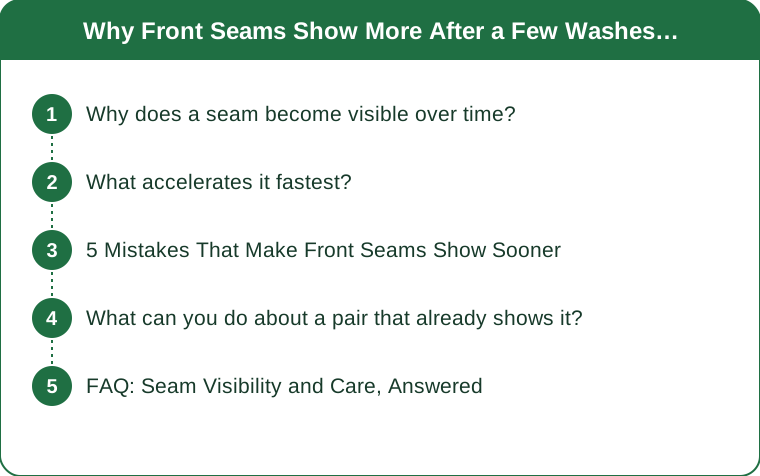
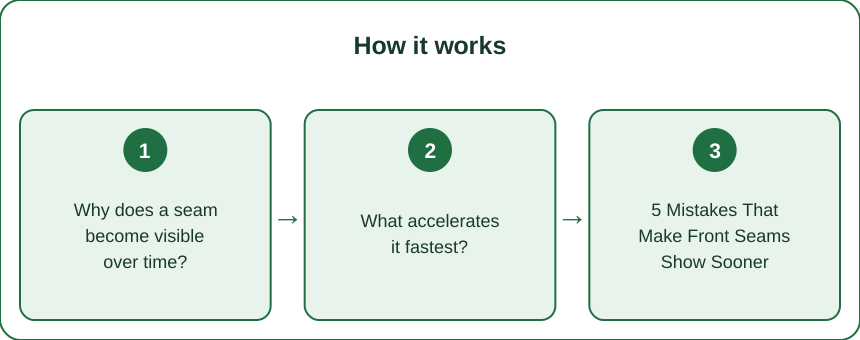
Why does a seam become visible over time?
Because visibility is a contrast problem, and one side of the contrast changes.
The seam is structurally different from the panel. It carries two or more fabric layers plus overlock and coverstitch thread. That stack does not thin, fade, or relax at anything like the rate of a single layer of knit. It is effectively a fixed reference point in a garment that is otherwise slowly changing.
Elastane degrades with heat and time. Every hot wash and every tumble dry cycle costs a little elastic recovery. As recovery drops, the panel stretches further under the same load - and a fabric stretched further is a fabric with more space between its yarns, which means more light through it.
Abrasion thins the high-contact areas first. The inner thigh and the front of the leg see the most rubbing, so the panel immediately beside the front seam thins faster than the fabric at the back of the calf. The result is a thinner window right where the seam is.
And pilling scatters light. A pilled surface reflects differently from a smooth one, which makes the smooth seam line read as a distinct stripe. In photographs with direct light this is dramatically exaggerated, which is why the phone shows it before the mirror does.
What accelerates it fastest?
Ranked by how much damage each does per cycle.
1. Heat, in every form. Hot water, tumble drying, and radiator drying all degrade elastane. Tumble drying is the single most destructive routine step for activewear - a garment dried on medium heat weekly ages several times faster than one air dried. Cold wash and hang dry is not a nicety; it is most of the answer.
2. Fabric softener. It works by coating fibres, and that coating both blocks moisture wicking and interferes with elastane recovery. It also builds up over time, leaving fabric that feels soft and performs badly. Skip it entirely for anything with elastane.
3. Washing with abrasive items. Zips, hooks, denim, and towels all abrade knit surfaces. Towels in particular shed lint and rub hard. Wash activewear together, inside out, ideally in a mesh bag.
4. Overloading the drum. Less water and more mechanical friction per garment. A packed load is a rougher wash than a half load at the same setting.
5. Wearing the same pair twice between washes - sweat is acidic and degrades elastane if it sits. Rinse or wash after each use, even if it feels excessive.
6. Sun drying in direct light. UV degrades elastane and fades dye unevenly. Shade dry, inside out, particularly through the last strong weeks of summer sun.

5 Mistakes That Make Front Seams Show Sooner
1. Buying a size down for compression. A garment worn near its stretch limit thins faster and shows every structural line. The seam becomes visible in weeks rather than months, and no washing routine will rescue it.
2. Assuming light colors are the problem. They show it sooner, but the mechanism is identical in black - the difference is that black leggings usually get replaced for pilling before the seam contrast becomes obvious.
3. Using the sports or heavy cycle. More agitation, more abrasion. A gentle or delicate cycle at 30C or below is right for essentially all activewear.
4. Storing folded on a sharp crease. A permanent fold line at the front creates exactly the sort of localised fabric change that makes seams read. Roll rather than fold, or hang.
5. Ignoring it until it is obvious. Elastane degradation is not reversible. The routine change works as prevention and not as repair - which is why the pair you switch to cold washing after wash twenty is already past saving.
The first mistake is the one that surprises people, because sizing down feels like it should improve the smooth look rather than shorten it.
What can you do about a pair that already shows it?
Honest options, from most to least effective.
Change how you wear it, not what you do to it. A pair with visible front seams is fine under a longer top, and fine for indoor or low-light sessions. Reassigning rather than replacing is legitimate and by far the cheapest response.
Wash inside out on cold and hang dry from now on to slow further change. This will not reverse anything - degraded elastane does not recover - but it stops the gap widening.
Check whether it is actually thinning or just relaxed. Some fabrics recover meaningfully after a proper cold wash and a full dry flat, especially if they have been tumble dried repeatedly and are simply stretched out. If it looks better after one careful wash, you have a relaxation problem, not a wear-through problem - and better care will help.
For future purchases, the durable features are identifiable. Look for a gusset rather than a four-way seam junction, flatlock rather than bulky overlock at the front, a fabric weight of roughly 240gsm or above for opacity headroom, and a squat-test in the changing room under bright light rather than the fitting room’s flattering one.
And be realistic about lifespan. Compressive activewear worn twice a week has a working life of roughly one to two years before elastane loss shows. Seam visibility at eighteen months is a garment reaching the end of its life, not a defect - though at eight weeks it is a manufacturing or sizing issue worth raising with the retailer.
FAQ: Seam Visibility and Care, Answered
Can I reverse fabric thinning?
No. Elastane degradation and abrasion are permanent. Better care slows further change but does not restore what is gone.
Does washing temperature really matter that much?
Yes. Heat is the main driver of elastane breakdown. Cold washing and air drying extends usable life substantially compared with warm washing and tumble drying.
Is fabric softener actually bad for leggings?
Yes for anything with elastane. It coats the fibres, reduces recovery and wicking, and builds up over repeated washes. Skip it.
Why does it look worse in photos than in the mirror?
Cameras apply contrast and sharpening that exaggerate texture differences, and flash or direct light emphasises the smooth seam against a slightly pilled panel. Daylight and a mirror are the fairer test.
How long should a pair of leggings last?
Worn twice a week with good care, roughly one to two years before elastic recovery noticeably drops. Heavy use or hot washing shortens that considerably.
Is a seamless pair the answer?
Not automatically. Seamless construction removes the stitched line but often uses lighter fabric, which can be less opaque overall. It solves one problem and can introduce another.
TL;DR:
- The seam does not change - the fabric around it thins, relaxes, and pills, so the contrast grows.
- Heat is the main accelerant: hot washes, tumble drying, and radiator drying all degrade elastane.
- Skip fabric softener entirely, wash inside out on cold with similar items, and hang dry in shade.
- Sizing down accelerates it more than anything else - a garment worn near its stretch limit shows structure fast.
- Already visible? Reassign the pair rather than replacing it, and buy next time on gusset, flatlock seams, and fabric weight.
Most seam visibility is a care and lifespan story rather than a design flaw. Cold water and a clothes airer buy you months.
See It in Motion
Seen here: Super High Waist Embossed Yoga Leggings with Inner Pocket — shop it on bubblelime.com
Keep Reading
This article is for general informational and styling purposes only. Fit, sizing, and product availability may vary.