Why Front Seams Show More Through Fleece-Lined Leggings, Not Less
Quick Answer: Fleece lining adds bulk at the seam as well as across the panel, and a seam that was one layer thick becomes four. That ridge sits under a fabric that is now stiffer and less able to drape over it, so it stands proud instead of disappearing. Thicker does not mean smoother. Look for flatlock or bonded seams, a gusset rather than a front-crotch seam, and brushed-inside knits rather than laminated fleece.
It is counterintuitive and it catches everyone. The thin summer leggings hide the seam. The thick winter pair announces it.
More fabric should mean more concealment.
It does not, and the reason is entirely about what happens at the seam itself.
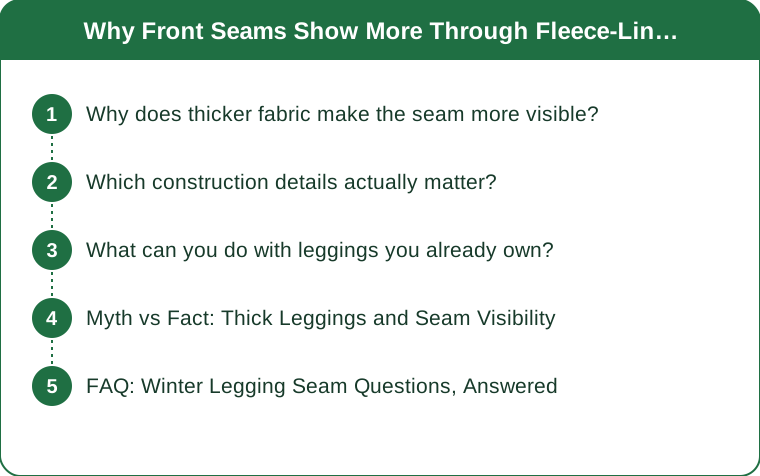
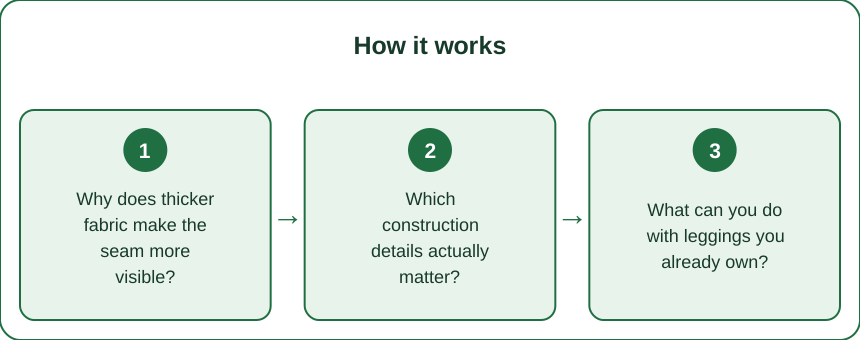
Why does thicker fabric make the seam more visible?
Because the seam gains thickness faster than the panel does, and the panel loses its ability to drape.
Every layer at the seam doubles. A single-layer knit seam is two thicknesses of fabric. A fleece-lined knit seam is four — two shell, two lining — plus the stitching. The seam ridge grows proportionally more than the flat area around it.
Stiffer fabric cannot drape over a ridge. A thin jersey conforms around a small ridge and hides it. A stiff, laminated or bonded fleece holds its own shape, so the ridge is transmitted straight through to the surface.
Bonded fabrics behave like a sheet, not a knit. Many fleece-lined leggings are two fabrics laminated together. That composite is far less compliant than a single knit of the same weight and shows every underlying structure.
Front-crotch seams are the worst case. A seam running vertically at the centre front is under tension when you move and sits over a curved surface — the two conditions that make a ridge most visible.
Light reflects differently off a ridge. Even where you cannot feel it, a seam ridge catches light at a different angle to the surrounding fabric, which is why it shows in photographs more than in the mirror.
And winter fabrics are frequently matte and dense, which paradoxically makes shadow lines more readable rather than less.
Which construction details actually matter?
The seam type and the panel layout, both of which are usually visible in product photos if you know what to look for.
A gusset instead of a front seam. A diamond or triangular gusset panel moves the seams away from the centre front entirely. This is the single most effective construction feature and the one to look for first.
Flatlock seams instead of overlocked. Flatlock joins fabric edge to edge rather than folding it over, so the seam adds far less thickness. It also feels better against skin.
Bonded or welded seams add almost nothing. Increasingly common on higher-end technical leggings. There is no stitching ridge at all.
Brushed-inside single knits rather than laminated fleece. A knit brushed on the inner face gives warmth without becoming a stiff composite, so it drapes and conceals far better.
Fewer panels is better. A four-panel legging has fewer opportunities for a visible line than an eight-panel one, regardless of seam type.
Check the seam placement in the product photo’s front view. If a vertical line runs up the centre front of the model, that is the seam you will be wearing.
Matte over shiny for winter. A slight sheen exaggerates every ridge by catching light along its length.

What can you do with leggings you already own?
Some of it is fixable, and some of it is a layering decision.
Size up half a size in fleece-lined pairs. Tension is what pushes the seam ridge outward. A pair worn at lower stretch shows structure noticeably less.
Wear a longer top for the season. The most reliable fix, and autumn layering makes it easy. A top reaching mid-thigh removes the question entirely.
Choose smooth seamless underwear. Two sets of ridges compound. A seamless brief under a fleece-lined legging removes half the problem.
Wash inside out and skip the dryer. Heat degrades the bonding on laminated fabrics, and a partially delaminated fabric ripples and shows structure far more.
Avoid fabric softener on these. It stiffens the hand of bonded fabrics over time.
Try them under overhead light before deciding. Front seam visibility is highly light-dependent. What shows under a shop’s downlights may be invisible in daylight and vice versa — check in the light you will actually be in.
Seasonal note: the darker your winter fabric, the less any of this matters, which is why so much winter activewear is black. If you want colour in fleece-lined bottoms, the construction details above become considerably more important.
Myth vs Fact: Thick Leggings and Seam Visibility
Myth: Thicker fabric always hides more. Fact: It hides the body better and the seam worse, because the seam grows thicker too and the fabric loses drape.
Myth: Expensive leggings do not have this problem. Fact: Construction predicts it, not price. A cheap gusseted flatlock pair outperforms an expensive laminated one with a front seam.
Myth: Sizing down makes them smoother. Fact: The opposite. More tension pushes the seam ridge outward and stretches the fabric thinner over it.
Myth: It only shows in photos because of the camera. Fact: The camera shows it because it does not perform the perceptual smoothing your eye does. It is genuinely there.
Myth: Fleece-lined always means bonded. Fact: Some are single knits brushed on the inside, which behave completely differently and conceal far better. Worth checking the description.
Myth: A longer top is a compromise. Fact: It is the standard styling answer, it works completely, and autumn layering makes it the natural choice anyway.
FAQ: Winter Legging Seam Questions, Answered
What is a gusset and why does it help?
A separate panel at the crotch that removes the centre-front seam entirely. It is the most effective single feature for avoiding a visible front line.
Are flatlock seams better than overlocked?
For visibility and comfort, yes — they add far less thickness because the fabric edges meet rather than fold.
Should I size up in fleece-lined leggings?
Half a size often helps if visibility is your concern, because less tension means less ridge. Check that the waistband still holds.
Why do mine show more in photos than in the mirror?
Cameras do not smooth the way your visual system does, and flash or overhead light emphasises ridges.
Do lighter colours really show more?
Substantially. Light fabrics show every shadow line. Dark colours hide construction almost entirely.
Is brushed-inside better than bonded fleece?
For drape and concealment, generally yes. Bonded is often warmer and more wind resistant, so it is a genuine trade rather than a clear win.
TL;DR:
- A fleece-lined seam is four layers plus stitching, so the ridge grows faster than the panel does.
- Bonded and laminated fabrics do not drape, so they transmit the ridge straight to the surface.
- Look for a gusset instead of a front seam, plus flatlock or bonded seams.
- Brushed-inside single knits conceal far better than laminated fleece composites.
- Own the pair already? Size up half, wear a longer top, seamless underwear, no dryer.
Construction predicts this, not price. Check the front view in the product photo.
See It in Motion
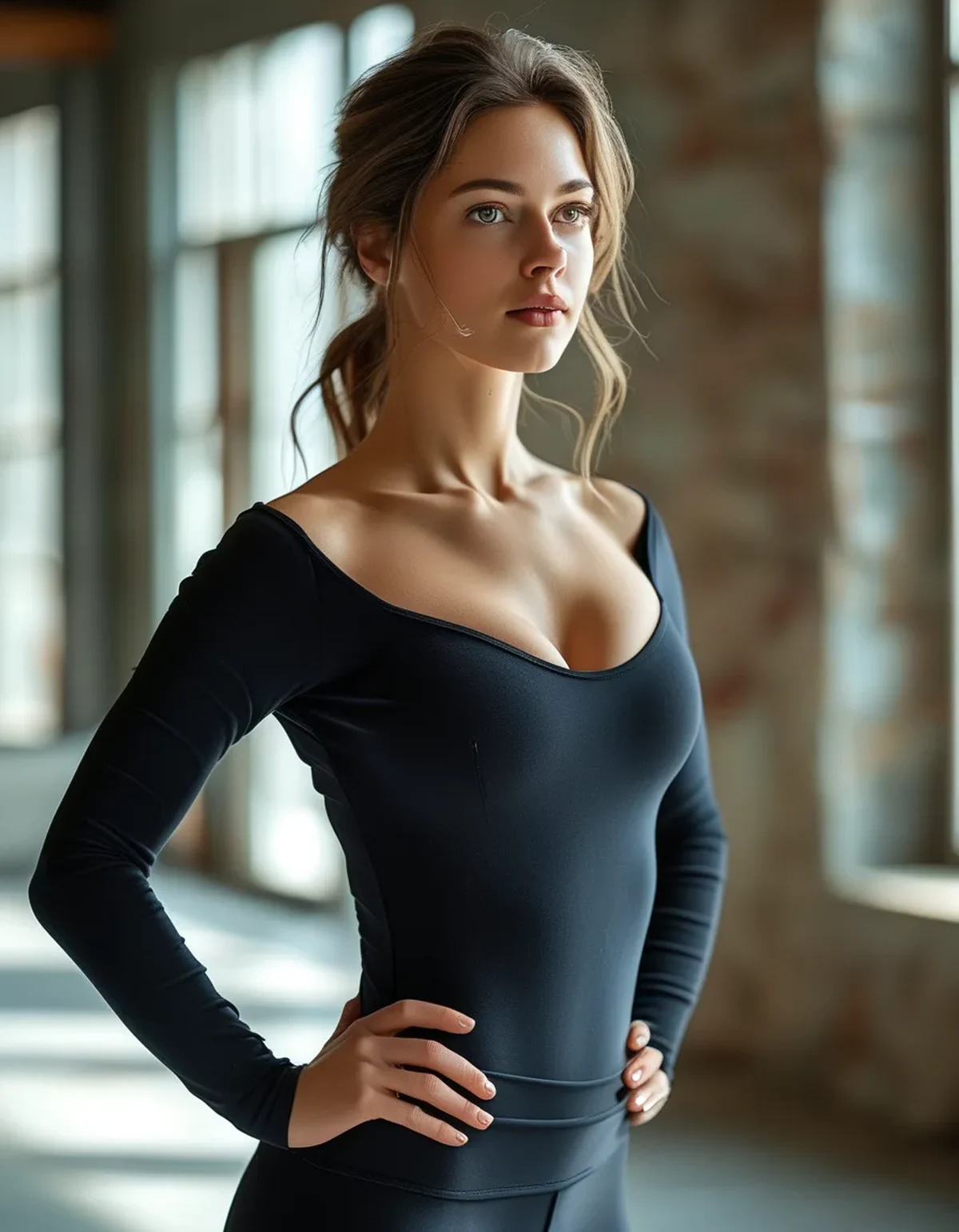
Seen here: Super High Waist Embossed Yoga Leggings with Inner Pocket — shop it on bubblelime.com
Keep Reading
This article is for general informational and styling purposes only. Fit, sizing, and product availability may vary.