Why Seamless Leggings Are Not Always the Answer for Front Seam Visibility
Quick Answer: Seamless leggings remove the stitched front seam but they are typically knitted from thinner yarn and shaped by knit density rather than by panels, which means they can cling more closely and reveal contour more, not less. What actually prevents front-line visibility is a proper gusset, a fabric with enough opacity and structure, and a rise that sits high enough. Seamless helps with one specific issue — a visible stitched line — and can make the underlying contour problem worse.
The assumption is intuitive and often wrong. If you switched to seamless and the problem did not go away, the construction was never the cause.

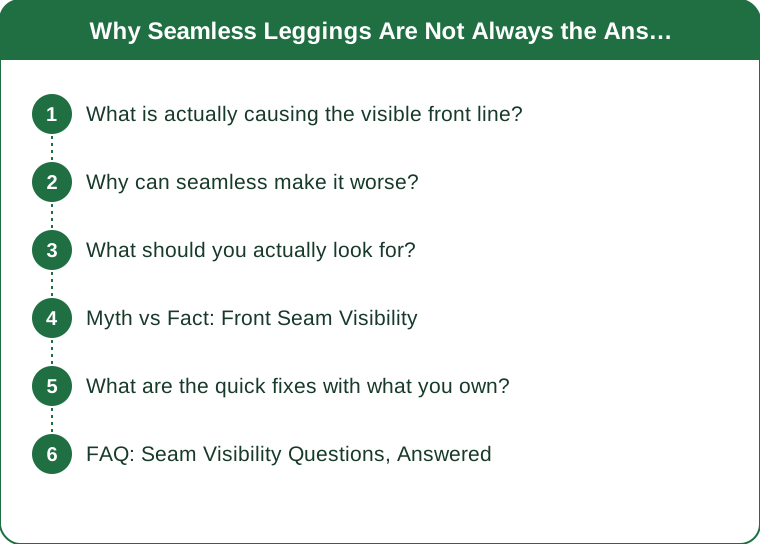
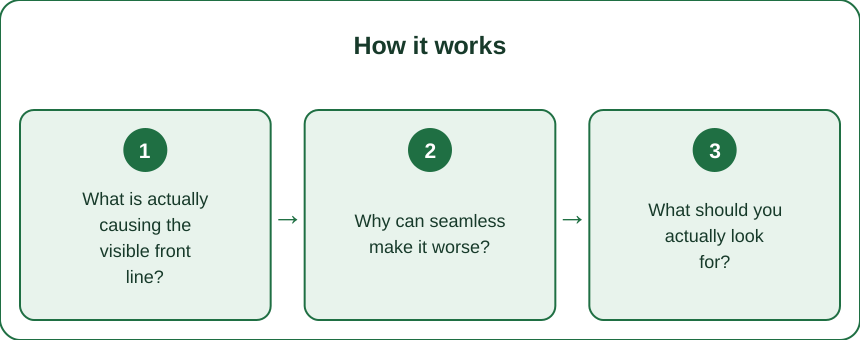
What is actually causing the visible front line?
Three separate things that get confused with each other.
A stitched centre front seam. Some leggings are constructed from two panels joined down the middle. This creates a literal line, most visible in light colours and under bright light. Seamless construction genuinely solves this one.
Contour visibility from fabric clinging. This is not a seam at all — it is the fabric conforming closely to the body. Thin, high-stretch, low-recovery fabric does this most, and seamless leggings are frequently made of exactly that kind of fabric.
A missing or badly shaped gusset. The gusset is the diamond or triangular panel at the crotch. A proper gusset is the single most effective construction feature for preventing the front-line problem, because it removes the four-seam convergence point and adds a layer of fabric exactly where it is needed.
If your issue is the second or third of these, seamless construction does nothing — and because seamless pieces are usually thinner, it can make the appearance more pronounced rather than less.
Why can seamless make it worse?
Because of how seamless garments are made.
Seamless leggings are knitted in the round on circular machines, which is a genuinely elegant construction. Shaping comes from varying the knit density and stitch pattern rather than from cutting and joining panels.
That means there is no place to add a structured gusset panel, because there are no panels. Some seamless pieces knit a denser zone at the crotch, which helps; many do not.
They also tend toward finer yarn and higher stretch, which is what gives them that light, second-skin feel. That same property is what makes them conform more closely to contour.
And opacity is often lower. The squat test failure rate on thin seamless leggings is noticeably higher than on panel-constructed compression fabrics, and reduced opacity makes every contour issue more visible.
None of this makes seamless a bad construction. It is comfortable, it eliminates seam chafing, and it looks smooth under fitted layers. It is just being asked to solve a problem it does not address.
What should you actually look for?
Four features, in order of importance.
A real gusset. Look at the product photos or check the garment inside out. A diamond or triangular panel at the crotch is what you want. Many brands mention it in the description; if none of the imagery shows the crotch construction, that is often a sign there is nothing to show.
Fabric weight and recovery. Heavier compression fabrics in the 250 to 320 gsm range hold their shape and resist conforming to contour. A thin 180 gsm legging will cling regardless of how it is constructed.
A high rise. A higher waistband changes the angle at which the fabric approaches the body at the front, which meaningfully reduces the problem. Low and mid rises are considerably more prone to it.
Colour and pattern. Light solids show everything; dark colours and subtle patterns hide contour effectively. This is not a construction fix but it is the fastest one available with what you already own.
A simple in-store test: bend forward, then squat fully, then check the front in a mirror in bright light. Standing still in a fitting room tells you very little.

Myth vs Fact: Front Seam Visibility
Myth: Seamless always means smoother. Fact: Seamless means no joined panels. Smoothness depends on fabric weight, density, and gusset construction, none of which seamless guarantees.
Myth: It is a sizing problem — just size up. Fact: Sizing up usually makes it worse, not better. Excess fabric bunches and folds at the front, and looser leggings ride and shift more during movement. Correct size with a proper gusset beats a size up.
Myth: Only cheap leggings have this issue. Fact: Price correlates weakly. Plenty of expensive thin seamless pieces have it and plenty of mid-price compression leggings with good gussets do not. Construction predicts it much better than price.
Myth: Wearing different underwear fixes it. Fact: It helps at the margins — seamless underwear removes visible lines and lighter, flatter styles reduce bulk — but it does not address fabric clinging or a missing gusset.
Myth: Fleece-lined leggings solve it in winter. Fact: The lining adds bulk which can help, but brushed interiors also grip the body more and some fleece-lined pieces have a pronounced centre front seam that shows through the thicker fabric even more clearly.
What are the quick fixes with what you own?
Four things you can do without buying anything.
Check the rise position. Many leggings sit lower through the day as they relax. Pulling the waistband up to its intended position resolves a surprising number of cases, and a waistband that will not stay up is a fit problem worth solving separately.
Wear a longer top for the pieces that misbehave. Not a solution, but an honest one — every wardrobe has a few pairs that get worn under a longline layer and that is fine.
Wash and dry them properly. Fabric that has lost recovery from heat damage clings far more than it did new. Cold wash, no dryer, no fabric softener. Softener coats the fibers and permanently reduces both recovery and moisture handling.
Reserve the light colours. Keep pale leggings for lower-visibility settings and use dark colours for anything where you will be photographed or in bright light.
As fall arrives and heavier fabrics come back into rotation, this problem naturally recedes. Winter-weight leggings are thicker, more opaque, and generally better constructed at the crotch — which is worth remembering if you are about to replace several pairs in August for a problem that a seasonal change will partly solve.
FAQ: Seam Visibility Questions, Answered
How do I check for a gusset before buying online?
Look for the word gusset in the description, and check whether any product image shows the garment inside out or from below. Brands that build a proper gusset generally mention it, because it is a selling point.
Does compression level matter?
Yes. Higher compression fabrics hold their own shape rather than conforming to yours, which is the property that helps here. Very light non-compressive fabrics conform most.
Is this more common in certain body types?
Rise position relative to your torso length matters more than body type. A legging whose rise sits lower on you than the designer intended is more prone to it, which is why the same style behaves differently on people of different heights.
TL;DR:
- Seamless removes a stitched centre seam but often uses thinner fabric with no structured gusset, which can make contour visibility worse.
- A proper gusset, fabric weight above roughly 250 gsm, and a high rise are what actually prevent the problem.
- Sizing up makes it worse; correct size with better construction is the fix.
- Cold wash, no dryer, and no fabric softener preserve the recovery that keeps fabric from clinging.
Turn your worst-offending pair inside out and look at the crotch. If there is no diamond panel there, you have found the cause, and no amount of seamless shopping was going to address it.
See It in Motion
Seen here: Super High Waist Embossed Yoga Leggings with Inner Pocket — shop it on bubblelime.com
Keep Reading
This article is for general informational and styling purposes only. Fit, sizing, and product availability may vary.